
Blog
Luxury Doors in Ghana: What Makes Them Worth the Investment?

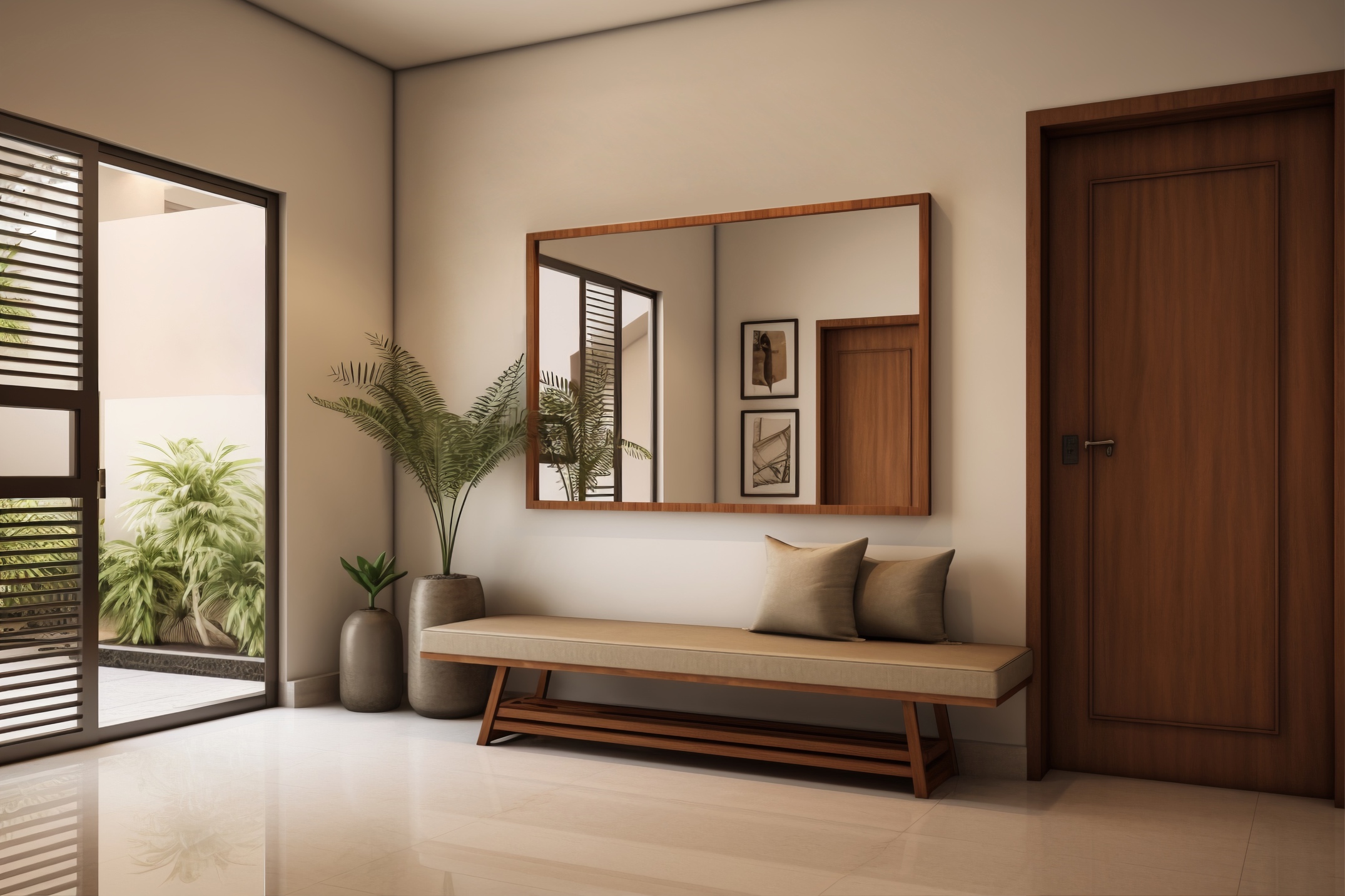
The first time someone walks up to your home, they see the door before anything else. In East Legon, Cantonments, Airport Residential, and Trasacco, that first impression carries real weight. Luxury doors in Ghana have moved from being a niche choice to a defining feature of serious properties. Homeowners, developers, and architects across Accra and Tema are treating the entrance as a design and security decision, not an afterthought.
The question most buyers still ask is direct: Is the price actually worth it?
It depends on what you are comparing. A cheap door and a luxury door both open and close. The difference shows up in year three, year eight, and the day someone tests your security.
What Defines Luxury Doors in Ghana
Most standard doors do the basics. Luxury doors are built to do much more, and the gap is visible in the construction, not just the surface.
The core starts with reinforced steel or high-grade composite material. The door leaf is engineered to hold its shape against warping and twisting caused by Ghana’s humidity, coastal salt air near Tema and Spintex, and the intense heat cycles that push and pull cheaper materials over time. The skin uses premium finishes, Laminox composite, engineered veneer, or high-gloss lacquer, each chosen for resistance to fading, peeling, and moisture absorption.
Hardware is not an add-on at this level. Multi-point locking systems secure the door at three or more contact points into the frame, not just at the handle. High-security cylinders resist picking and drilling. Hinges are concealed or heavy-duty exposed, depending on the design. Smart-lock compatibility means fingerprint, PIN, or app-controlled access without compromising the aesthetic.
Scale and format complete the picture. Pivot doors, oversized double-leaf entrances, and one-and-a-half configurations create a sense of arrival that a standard 900mm door cannot replicate. The door proportions match the architecture. The materials respond to the climate. The hardware reflects the security standard of everything inside.
Custom Luxury Doors in Accra: Built for Your Space
Off-the-shelf doors are built for no one in particular. Custom luxury doors in Accra are built for your exact opening, your architectural language, and your security requirements.
That specificity matters for two practical reasons.
First, Ghana’s sandcrete block construction produces opening tolerances that imported standard doors frequently do not fit cleanly. The result is visible gaps, weak frame anchoring, or rework costs that many homeowners and developers absorb without realising the source. A local manufacturer matches your precise measurements from the start and eliminates that problem before it begins.
Second, customisation means the door serves the property rather than the property working around the door. Finish, panel design, glass insert placement, hardware finish, and colour all align with the building. That alignment is what separates a designed home from an assembled one.
At Doors and Locks and More, customisation is not a premium add-on. It is the standard operating model across all eight product families: Luxury, Composite, Laminox, High-Gloss, Natural Embossed, Metal, PVC, and Door-in-Door systems.
Luxury Doors vs. Standard Doors: The Real Comparison
Here is how the two options compare across the factors that matter most in Ghana’s conditions:
| Feature | Standard Door | Luxury Door |
| Core material | Basic timber or hollow MDF | Reinforced steel or high-grade composite |
| Climate resistance | Warps and swells in humidity | Engineered for Ghana’s heat and coastal air |
| Security | Single-point locking, basic hardware | Multi-point locking, high-security cylinders, smart-lock ready |
| Finish durability | Fades and peels within 3 to 5 years | Powder-coat, laminate, or high-gloss resists fading for 15 to 20 years |
| Customization | Limited sizes and finishes | Full customisation across size, format, finish, hardware, and colour |
| Lead time (local) | Varies, often inconsistent | Predictable with local manufacturing |
| Installation quality | Often subcontracted separately | Integrated, trained installation teams |
| Lifespan in Ghana | 5 to 8 years with repairs | 15 to 20 years with basic maintenance |
| Replacement cost over 20 years | Two to three replacements | One door, maintained |
Luxury Door Prices vs. Long-Term Cost
Luxury door prices are higher on day one. That part is straightforward. A well-engineered premium door costs more upfront than a basic imported option. But the calculation changes over ten years.
A cheap door in a coastal Ghana setting often needs replacement within five to seven years. Salt air corrodes the hinges, humidity swells the leaf, and the finish peels at the edges. You pay for a new door, new installation, and new hardware. Do that twice, and you have spent more than a single luxury door would have cost, without ever matching the security or the appearance.
Here is a real-world scenario that reflects what many homeowners in Airport Residential and Spintex have experienced.
A homeowner installs a standard imported door at GH₵2,500. After six years, the frame is loose, the finish is patchy, and the lock is compromised. A second door goes in at GH₵3,000 with installation. By year twelve, the same cycle repeats. Total spent: over GH₵8,000, with two rounds of disruption, two sets of installation work, and a security gap during each transition.
A comparable luxury door from a local manufacturer costs more at the start but holds its performance for fifteen to twenty years with basic maintenance. The security specification stays intact. The first impression stays consistent. The property value holds in a market where buyers and tenants notice quality at the entrance.
For developers and homeowners in premium locations, that arithmetic is clear.
Performance in Ghana’s Climate
Ghana tests doors in ways that temperate climates do not. The combination of high ambient humidity, direct sun exposure, seasonal rains, and coastal salt air creates a demanding environment for any material.
Composite and Laminox doors resist the two main failure modes: moisture absorption leading to swelling and warp, and UV exposure leading to surface breakdown. High-quality powder-coated and laminated finishes hold colour and texture far longer than painted timber or basic PVC.
Anti-corrosion hardware matters especially in Tema, Sakumono, Spintex, and Takoradi. Stainless steel and treated zinc alloy hinges, handles, and lock components maintain smooth operation and structural integrity in salt-air environments where standard hardware deteriorates visibly within two to three years.
Luxury doors from Doors and Locks and More are specified with Ghana’s climate in mind, not imported from contexts where these conditions do not apply.
Design Impact and Property Value
Entrance doors photograph well, or they do not. In a market where buyers browse listings online before visiting, the front door appears in almost every exterior shot. A luxury entrance signals the price point before a single conversation starts.
In practice, this affects how quickly units sell and at what price. Developers finishing gated communities in East Legon Hills and Tema Community 25 are reporting that entrance quality influences buyer decisions at viewing. Tenants in premium apartments factor the entrance into their perception of the building’s standard.
Three practical examples from Doors and Locks and More projects illustrate this:
A 40-unit gated community used composite security doors at all unit entrances and Natural Embossed interior doors throughout. The developer completed handovers on schedule and reported zero quality complaints related to doors in the first twelve months.
A coastal estate near Tema used Laminox doors with anti-corrosion hardware across sixty units. Two years in, none of the entrance doors showed signs of the corrosion that affected the developer’s previous project, where standard imported doors were used.
A private villa in Cantonments specified a pivot luxury door with a high-gloss black finish and a concealed smart-lock system. The homeowner described the entrance as the element that “completed the architecture.”
Who Should Seriously Consider Luxury Doors in Ghana
Luxury doors are the right choice when:
- The property is located in or marketed at a premium price point
- You plan to stay for ten or more years, or you are selling into a discerning market
- Security is a serious consideration based on what is inside the property
- You want the entrance to align with the architectural quality of the rest of the building
- You are a developer whose brand depends on consistency and finish quality across units
How to Choose the Right Luxury Door
Step 1:
Define the architectural style. Modern minimalist, contemporary mixed, or traditional with premium detailing.
Step 2:
Choose the material family. Composite or Laminox for exteriors in humid or coastal settings. High-Gloss or Natural Embossed for interior statement doors. Metal-composite for maximum security at entry points.
Step 3:
Decide on format. Single, one-and-a-half, double, or pivot configuration based on the opening size and the design intent.
Step 4:
Specify the security level. Multi-point locking is a minimum. Smart-lock integration where access control matters.
Step 5:
Work with a design partner who manufactures locally. Faster lead times, precise measurements, and integrated installation make a measurable difference to project quality and timelines.
Doors and Locks and More handles design consultation, manufacturing, and professional installation across Accra, Tema, Kumasi, and surrounding areas. Every luxury door project starts with a site visit and a clear specification, not a generic catalogue.
Book your design consultation today. Request a custom proposal for your home or development, and ask for the Luxury Entrance Door Design Guide for Ghana Homes and Estates.
Key Takeaways
- Luxury doors use reinforced cores, climate-resistant finishes, and multi-point locking systems that standard doors do not offer
- Custom luxury doors in Accra are sized and finished for your exact space, reducing rework and matching your architectural intent
- Luxury door prices cost more upfront, but outlast cheaper options by ten or more years in Ghana’s climate
- For premium properties, entrance quality directly influences buyer perception, rental appeal, and resale value
- Local manufacturing means precise sizing, stable pricing, faster delivery, and direct after-sales support
People Also Ask
-
What makes luxury doors in Ghana different from normal doors?
Luxury doors use reinforced steel or composite cores, multi-point locking, high-quality hardware, and climate-resistant finishes. They are heavier, more secure, and built to last significantly longer than standard options in Ghana’s conditions.
-
Are luxury doors worth the price in Ghana’s climate?
Yes. Ghana’s humidity, coastal salt air, and heat cycles damage lower-grade doors faster. Luxury doors are engineered for these conditions and typically last fifteen to twenty years with basic maintenance, making them more cost-effective over time.
-
Which materials work best for luxury entrance doors in Ghana?
Laminox, high-grade composite, and reinforced metal-composite constructions perform best. They resist warping, swelling, and corrosion better than basic timber or standard PVC in Ghana’s environment.
-
Can luxury doors in Ghana be fitted with smart locks?
Yes. Premium door systems from Doors and Locks and More are smart-lock ready, supporting fingerprint, PIN, and app-controlled access without changing the door design.
-
Is it better to import luxury doors or buy from a local manufacturer in Ghana?
Local manufacturing gives you custom sizing, faster delivery, stable pricing not tied to dollar rate fluctuations, and direct after-sales support. Imported options often carry long lead times, currency-linked pricing, and limited customisation at the luxury tier.


